
You’ve found a builder you like. The quote looks solid. Then a few weeks into the process, a new number appears at site costs and suddenly the budget is $25,000 to $60,000 higher than you planned.
This is one of the most common shocks Perth home buyers experience, and it happens because builder base quotes almost never include site costs in the headline figure. They’re listed separately, often assessed after you’ve already emotionally committed to a builder and a design.
Understanding site costs before you choose land or sign anything is one of the most valuable things you can do to protect your budget. This guide explains exactly what they are, what drives them up, and how to go into the process with your eyes open.
What Exactly Are Site Costs?
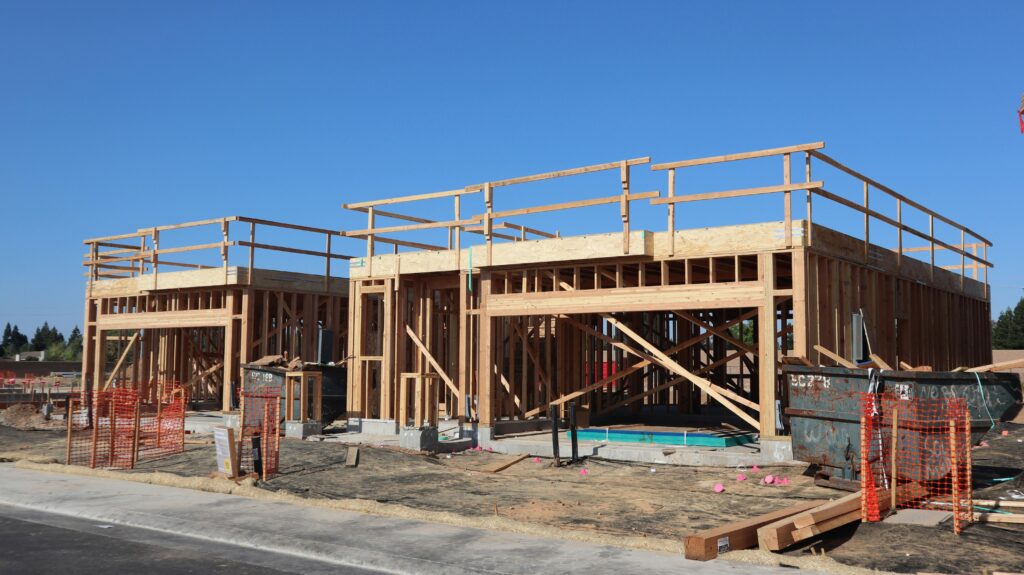
Site costs are all the expenses involved in preparing your specific block of land for construction. They sit between “land purchase” and “home construction” in the building timeline, and they vary dramatically from one block to the next.
Where a builder’s standard quote covers the home itself, the frame, the roof, the fit-out, the finishes site costs cover everything needed to make your particular piece of land ready to build on.
Two identical home designs on two different blocks in the same suburb can have site costs that differ by $30,000 or more. The land doesn’t care what the builder quoted. It has its own requirements.
If you’re working through your finance structure and haven’t factored in site costs yet, our Borrowing Power Guide is a useful starting point for understanding your real total budget.
What’s Included in Site Costs
Earthworks and Site Levelling
If your block isn’t flat and many Perth blocks aren’t it needs to be cut, filled, or both to create a workable platform for construction. Levelling on a mildly sloped block might cost $3,000 to $8,000. A significantly sloped block requiring major cut and fill can push $20,000 to $40,000 or more.
In new estates, lots are sometimes pre-levelled by the developer, but this isn’t always the case. In established suburbs, particularly for knock down and rebuild projects, terrain variation is common and rarely visible from a photo.
Soil Classification and Treatment
Before anything is built, the soil needs to be tested and classified. Perth has significant variation in soil types from sandy coastal soils to reactive clay further inland. The classification (ranging from A through to H and P) determines what slab and footing design is required.
A Class A or S block is straightforward. Class M, H1, H2, or P (problem) soils require engineered slabs and deeper or more complex footings, which adds cost. Reactive clay soils, in particular, can push slab costs up by $10,000 to $25,000.
Soil testing typically costs $500 to $1,500, but this is money well spent. Discovering your soil classification after you’ve signed a contract is a common budget blowout trigger.
Service Connections
Every home needs connections to power, water, gas, and sewerage. In new estates, these services are usually stubbed to the boundary and the connection cost is modest. In established areas or rural-fringe lots, the story is different.
If services need to be extended a significant distance to reach your block, costs rise quickly. A sewer connection in an area without existing infrastructure can run $10,000 to $30,000 on its own. Electrical service upgrades, particularly where the existing pole infrastructure is outdated, add more.
Our Land Sourcing service always assesses service infrastructure as part of block evaluation it’s one of the first questions to answer before recommending a lot.
Retaining Walls
Retaining walls are required when there’s a significant level change between your lot and an adjacent lot or street. In Perth’s hillier northern and eastern suburbs, this is common.
Retaining wall costs vary based on height, length, and material. A basic timber retaining wall might cost $250 to $400 per metre. Concrete block retaining runs $400 to $700 per metre. For larger walls on significantly sloped sites, total retaining costs can reach $20,000 to $50,000.
This is one of the costs that builders often present as a separate item after the initial quote, because it can’t be accurately estimated without a site inspection.
Stormwater and Drainage
All new homes in Perth require approved stormwater drainage. On a flat sandy lot in a new estate, this is typically straightforward. On older lots, sloped lots, or where council requirements mandate specific drainage solutions (like soakwells of a certain size or connection to street drainage), costs increase.
Budget $2,000 to $8,000 for standard drainage. Complex drainage requirements or lots that require pumped systems can exceed $15,000.
Crossover and Driveway Preparation
A vehicle crossover connecting your driveway to the street needs council approval and construction. Costs vary by council and material but typically sit between $1,500 and $4,000.
Why Site Costs Are So Often a Surprise
The honest answer is that builders have a structural incentive to quote low initially. A lower headline number gets buyers through the door. Site costs are then presented once the buyer is invested in the process, the land, and the design at which point they’re less likely to walk away.
This isn’t unique to any one builder. It’s a systemic feature of how volume builders approach quoting. The base price attracts you; the addenda is where the real number takes shape.
When you’re comparing builders and one quote looks significantly cheaper than others, it’s worth asking specifically: what site costs are included in this figure, and what’s excluded?
Working with an independent building broker changes this dynamic. Because we’re not aligned with any builder, we assess site costs as part of the whole picture from the start not as a later addition that catches you off guard.
How Much Should You Budget for Site Costs?
A rough guide for Perth in 2026:
| Site Condition | Estimated Site Costs |
| Flat, sandy, serviced new estate lot | $8,000 – $18,000 |
| Mildly sloped, established suburb | $18,000 – $35,000 |
| Sloped block with retaining required | $30,000 – $55,000 |
| Reactive soil, complex drainage | $25,000 – $50,000 |
| Rural-fringe, limited services | $25,000 – $60,000+ |
For most Perth buyers on standard lots in growth corridors, budgeting $15,000 to $25,000 for site costs is a reasonable planning figure. For anything on a sloped, established, or complex site, get a proper assessment before you commit.
Our How It Works page outlines how we step through site assessment as part of the property pathway.
Site Costs and House & Land Packages
House and land packages in Perth’s growth corridor estates often include a fixed site cost allowance but the key word is “allowance.” If the actual site assessment reveals costs higher than the allowance, the difference falls back to you.
Always ask the builder:
- What is the site cost allowance included in this package?
- What triggers additional site costs above this allowance?
- What’s the process if the assessment comes in higher?
A fixed site cost allowance of $10,000 on a package sounds reassuring. If your actual site costs come in at $22,000, you’re paying the $12,000 difference. That’s not an unusual scenario in Perth’s outer northern or southeastern growth corridors where lots vary significantly in their preparation requirements.
If you’re looking at low deposit home builds and working with a tight budget, knowing your site costs accurately upfront is even more critical; there’s less buffer to absorb surprises.
How to Protect Yourself
1. Request an itemised site cost estimate before signing. A reputable builder will provide this. If they won’t, that’s a red flag.
2. Get a site inspection done early. Before you sign anything, have the block physically assessed. The cost of a professional site inspection ($500 to $1,500) is insignificant compared to a $20,000 site cost blowout.
3. Compare quotes on a like-for-like basis. If one builder includes a $15,000 site cost allowance and another quotes $8,000, they’re not quoting the same thing. Our Home Designs Guide covers how to interpret inclusions and exclusions properly.
4. Ask what’s not included. Experienced builders will have a standard list of exclusions. Common ones include retaining walls, significant earthworks, sewer backdrops, and building over easements. Know what you’re not covered for.
5. Use an independent broker. This is the most effective protection. Our role as a building broker is to represent you not the builder which means we review site assessments, challenge quotes, and make sure you understand the full cost picture before you commit.
Site Costs for Investors
If you’re building as an investment, site costs affect your yield and your finance position. A higher than expected site cost bill affects your total cost basis, your LVR, and potentially your rental yield calculations.
Property investors we work with factor site costs into their investment modelling from day one. It’s one of the differences between a build that performs as planned and one that underdelivers on paper.
Our Developer Services extend to multi-unit projects where site costs are assessed across the whole development, not just a single dwelling.
FAQs: Site Costs in Perth
Are site costs always extra on top of the builder’s quote?
Usually, yes. Most builder base quotes include a site cost allowance, but this is rarely the full amount. If the actual assessment exceeds the allowance, you pay the difference. Always clarify what’s included versus what’s a fixed figure.
When do I find out what my actual site costs are?
Ideally before you sign. You should request a site inspection and soil test before contract execution. Some builders won’t do this until after you’ve signed a preliminary agreement, be cautious of that approach and make any contract conditional on a full site assessment.
Can site costs change after the contract is signed?
They can, and this is a common source of disputes. Fixed-price contracts with clearly defined site cost inclusions offer the most protection. Make sure your contract specifies what site cost items are fixed and what can vary.
Who pays for the soil test and site inspection?
In most cases, the buyer pays for soil testing ($500 to $1,500). Some builders include this in their preliminary agreement costs. Either way, it’s a cost worth paying for the information it provides is essential.
Do site costs apply to knock down rebuild projects too?
Yes. Knock down rebuilds on established blocks often have higher site costs than new estate lots because of ageing service infrastructure, potential soil contamination, and access constraints. Always get a site-specific assessment.
Know Your Full Budget Before You Commit
Site costs are not an add-on or a technicality. They’re a core part of your build budget, and understanding them before you commit to land, a builder, or a contract is the difference between a project that goes to plan and one that doesn’t.
At The Property Plug, we walk every client through a full cost picture land, site, build, and finance before anything is signed. No surprises. No gap between what you expected and what you owe.
Book a free strategy call today and get a clear, complete picture of what your build will actually cost.
Or call us on 0483 965 555. We’ll assess your land, your finance position, and your build goals and give you the numbers you need to move forward with confidence.