
It’s one of the most common decisions Perth homeowners face and one of the most expensive to get wrong when deciding whether to renovate or rebuild in Perth.
You own a home that isn’t working anymore. The layout is dated, the bones are ageing, or you’ve simply outgrown it. You love the street, the school zone, the proximity to work. But you’re staring at either a $250,000 renovation or knocking it down and starting again and you’re not sure which one actually makes sense.
Both paths have genuine merit. But the right answer depends on your specific property, your financial position, and what you’re trying to achieve. This guide walks through the decision clearly so you can make it with confidence.
Why This Decision Matters More in Perth Right Now
Perth’s property market in 2026 has seen significant land value appreciation across established suburbs within 15 to 20km of the CBD. In many of these areas, land values have increased faster than dwelling values, which fundamentally changes the renovation vs rebuild equation.
When your land is worth $700,000 and your total property value is $950,000, the dwelling itself is contributing only $250,000 of value. At that point, spending $300,000 on a renovation to improve a dwelling that the market is only valuing at $250,000 requires careful scrutiny. You may be adding cost without adding equivalent value.
Conversely, rebuilding with a well-designed, well-specified new home on that same block could bring the total property value to $1.4 million or more, a meaningful equity uplift that a renovation simply can’t match.
This is why the question isn’t just “what do I want?” It’s “what does the maths actually say on my specific block?”
Understanding your borrowing power is the starting point. Whether you’re renovating or rebuilding, you need to know how much you can borrow before you start costing either option.
The Case for Renovating
Renovation is the right call in a narrower set of circumstances than many people assume but when those circumstances apply, it’s genuinely the better option.
When Renovation Makes Sense
The structural bones are sound. If the frame, slab, roof structure, and key services are in good condition and will last another 30 years, you’re preserving real asset value by renovating rather than demolishing. Knocking down a structurally sound home to rebuild is rarely the most efficient use of capital.
The scope is limited and well-defined. A kitchen and bathroom renovation, a rear extension, or a reconfiguration of internal walls these are manageable projects with predictable costs if scoped properly. The risk of blowout is lower than a whole-house renovation.
Heritage or character requirements apply. In some Perth suburbs particularly within councils with character retention policies demolition may not be permitted or may be significantly restricted. In those cases, renovation isn’t just financially preferable; it may be your only option.
The renovation cost stays below 50% of rebuild cost. As a rough guide, if your renovation scope can be delivered for less than half what a full knock down rebuild would cost, and the outcome meets your needs, renovation is usually the better financial decision.
You can stay at home during works. Avoiding the cost of temporary accommodation during a build (which in Perth’s rental market adds $15,000 to $40,000 to the total project cost over a 20 to 28 month build period) is a genuine financial advantage of renovation over rebuild.
The Case for Rebuilding
A knock down and rebuild wins in more situations than most homeowners initially expect.
When Rebuilding Makes More Financial Sense
Major structural or systems work is required. If your renovation scope includes rewiring the entire home, full replumbing, asbestos removal, restumping or reslab, or significant roof replacement, you’re already paying for the expensive, invisible parts of a new build without getting a new build. At that point, the cost differential between major renovation and full rebuild often narrows significantly.
The layout problems are fundamental. Cosmetic renovations are affordable. Moving load-bearing walls, relocating wet areas, or reconfiguring a floor plan that simply doesn’t work requires structural intervention and structural renovation work is expensive, disruptive, and rarely delivers the same result as a home designed from scratch for how you live.
The land value is high relative to the dwelling. As discussed above, when land value significantly outpaces dwelling value in your suburb, rebuilding captures the full potential of the asset. A new home on a well-located block will typically achieve a higher valuation than the same block with a renovated older dwelling.
Energy efficiency and compliance are a concern. Homes built before 2000 particularly before 1990 often have insulation, glazing, and energy performance that can’t be economically brought up to modern standards through renovation. A new home built to current energy requirements will deliver meaningfully lower running costs for decades.
You want full warranty coverage. New homes come with builder warranty (statutory warranty periods in WA cover structural defects for six years and non-structural for twelve months). A renovated home typically has no warranty on the underlying structure.
Our custom home builds page explains how we help clients navigate the rebuild process from block assessment through to handover.
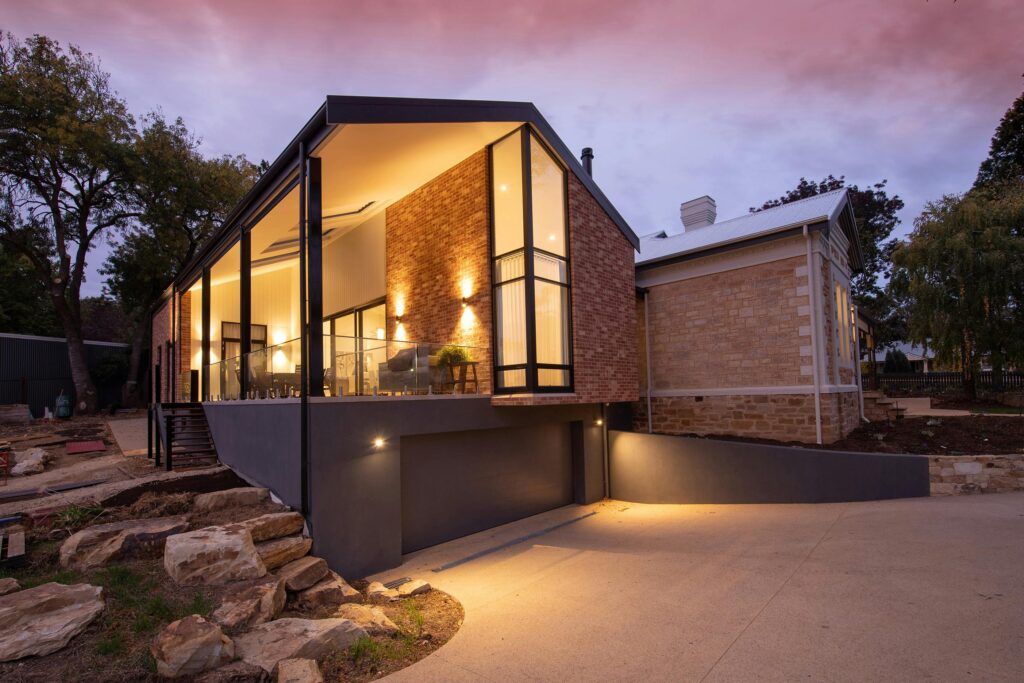
Running the Numbers: A Real Comparison
Let’s make this concrete with a typical Perth scenario.
The property: A 1970s 3-bedroom brick home in an established suburb 12km from the CBD. Land value: $680,000. Current total property value: $880,000.
Renovation option: Full kitchen and bathroom renovation, new flooring throughout, rear extension to add a fourth bedroom and open plan living area, new roof, electrical upgrade to comply with current standards. Total cost estimate: $280,000 to $340,000.
Expected post-renovation value: $1,050,000 to $1,150,000. Value added over cost: Potentially break-even to marginally positive.
Rebuild option: Demolition, site preparation, and a 220sqm four-bedroom home built to current standards with modern design. Total cost including all site costs and professional fees: $480,000 to $560,000.
Expected post-rebuild value: $1,350,000 to $1,500,000. Value added over cost: $150,000 to $300,000 equity gain.
The rebuild costs more upfront and requires temporary accommodation. But the financial outcome is meaningfully better on this block at this land value.
Run these numbers on your specific property and the picture becomes clear quickly. It’s the kind of analysis we do with clients as a starting point before any builder is involved, before any design is commissioned.
The Costs People Forget to Include
In Renovation
- Contingency (renovations almost always run over budget 15% to 20% above quote)
- Temporary accommodation if the work makes the home unliveable
- Staging costs if you need to vacate furniture
- Council approvals and certifications
- Unexpected discoveries: asbestos, termite damage, hidden water damage
In Rebuild
- Demolition: $18,000 to $45,000
- Site costs: $15,000 to $60,000+ (often the biggest surprise see our full guide on what site costs are and why they blow out new build budgets)
- Temporary accommodation: $15,000 to $40,000
- Design and documentation: $8,000 to $25,000
- Council approvals: $5,000 to $15,000
Neither path is cheap. The question is which one delivers more for your specific investment.
Finance: How Each Option Is Funded
Renovation finance typically uses a construction loan for larger projects, or a home equity loan or redraw facility for smaller scopes. If you have sufficient equity most Perth homeowners in established suburbs do in the current market funding a renovation is relatively straightforward.
Rebuild finance is structured as a construction loan, releasing funds in stages as the build progresses. The land (and any existing equity) serves as security. You’ll carry the cost of both your mortgage and temporary accommodation during the build period, which needs to be factored into serviceability.
Our finance brokering service structures both types of finance and can model each option for your property specifically so you can compare the real cost of each path, not just the construction quotes.
Government grants may also apply in rebuild scenarios for eligible buyers. Worth checking before you decide.
What About Selling and Buying Elsewhere?
There’s a third option worth naming: sell your current property and buy (or build) in a location better suited to your needs.
In Perth’s current market, this path carries significant transaction costs, agent fees, stamp duty on the new purchase, and the risk of buying into a market that’s already moved. For homeowners with strong equity in well-located established suburbs, selling to buy elsewhere is often the most expensive of the three options when all costs are accounted for.
That said, if your needs have shifted significantly from a different suburb, different lifestyle this may genuinely be the right move. Our land sourcing service can help identify opportunities in the areas that matter to you if that’s the direction you’re heading.
For investors, the calculation is different again. Whether you’re renovating or rebuilding a rental property, the question of yield and capital growth should anchor the decision. Our property investors guide covers how to approach these decisions from an investment perspective.

How to Make the Decision With Confidence
The most common mistake is starting with a builder or a renovation company before you understand the full financial picture. Getting a renovation quote or a rebuild quote before you know what each option is actually worth to your specific property leads to decisions based on incomplete information.
The better sequence:
- Assess your land and total property value honestly
- Understand your borrowing position and what each option costs to finance
- Get a like-for-like cost estimate for both paths
- Compare the financial outcomes not just the costs, but the expected value after completion
- Make the decision based on what the numbers say, not what the builder or renovation company in front of you is selling
Our how it works page explains how we guide clients through exactly this kind of decision before any money is committed to either path.
FAQs: Renovate or Rebuild in Perth
Is there a simple rule of thumb for when rebuilding beats renovation?
The most useful guide: if your renovation estimate exceeds 40% to 50% of what a full rebuild would cost, and major structural or systems work is involved, rebuilding is almost always the better financial outcome. But run the numbers on your specific block and suburb before deciding.
Can I get finance for a major renovation the same way I would for a new build?
Yes. Significant renovation projects are typically funded via construction loans, which release funds in stages against certified progress. The process is similar to a new build but your existing dwelling serves as additional security.
Does a new build always add more value than renovation?
Not always. In areas where land values are lower relative to total property value, a well-executed renovation can deliver comparable equity outcomes at lower cost. The land-to-total-value ratio is the key variable.
How long does each option take in Perth in 2026?
A major renovation typically takes 4 to 12 months depending on scope. A knock down rebuild runs 20 to 28 months from demolition to handover in Perth’s current construction environment. Both timelines are longer than most people initially expect.
Do I need council approval for a major renovation in Perth?
For structural work, extensions, and changes to the building footprint, yes. A building permit is required and may need to be preceded by Development Approval depending on the scope, your lot, and your council’s requirements. Heritage overlays in some suburbs add further requirements.
Get the Full Picture Before You Decide
The renovation vs rebuild decision is one of the biggest financial calls you’ll make as a homeowner. Getting it right requires clear data, not gut feel or a builder’s sales pitch.
At The Property Plug, we work through this analysis with Perth homeowners regularly assessing property values, modelling finance options, comparing build costs, and giving clients an honest picture of which path delivers the better outcome for their specific situation.
Book your free strategy call today. We’ll run the numbers with you, answer your questions, and help you move forward with a decision you’re confident in.
Or call us on 0483 965 555. No cost, no commitment, just clarity.