
Most articles about deposits focus on buying an established home. You see a number, usually 5 or 20 percent, and assume it applies to building too. It does not, and that distinction matters more than most first home buyers realise.
Building a new home in Perth involves a different loan product, a different drawdown structure, different costs, and different scheme eligibility compared to buying an existing property. The deposit question is not just “how much do I need?” but “how much do I need, for what, and by when?” because building stretches costs across a timeline rather than landing them all at settlement.
This guide gives you the real picture on deposit requirements for building in Perth in 2026, including the low-deposit pathways that most buyers do not know exist.
Why Building Is Different From Buying
When you buy an established home, your lender releases the full loan amount at one settlement. Your deposit covers the gap between that loan amount and the purchase price, and you pay Lenders Mortgage Insurance if your deposit is below 20 percent.
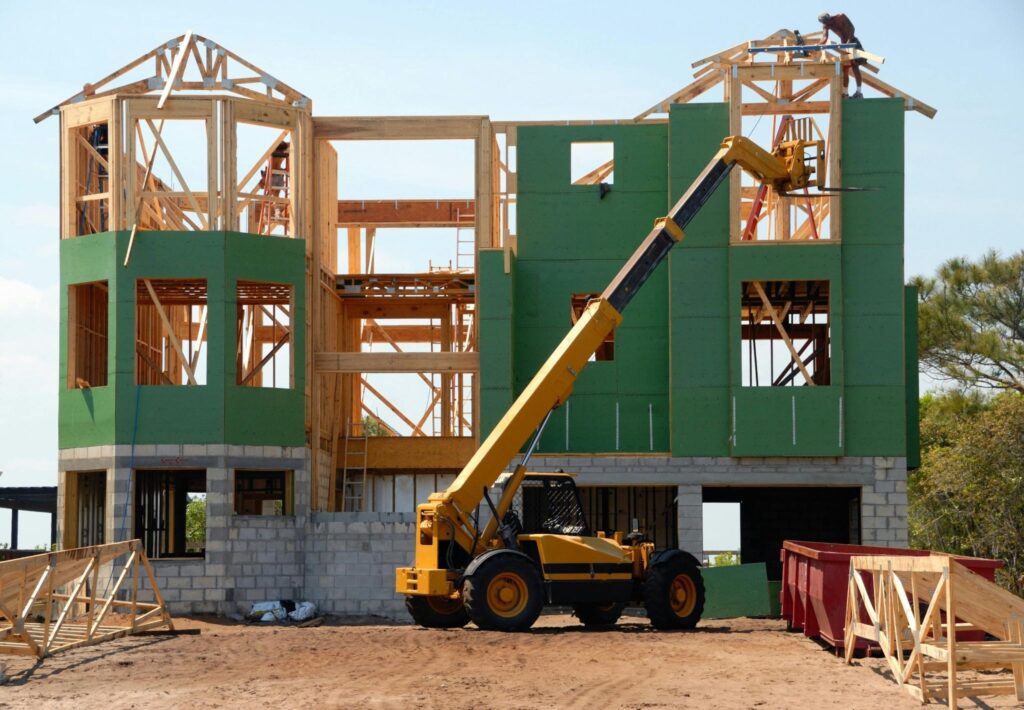
Building works differently. Rather than receiving the full loan amount at settlement, a construction loan releases funds progressively in stages that align with your builder’s progress, so you only pay interest on money that has actually been drawn down. The typical stages are slab, frame, lock-up, fixing, and completion.
This staged structure has a practical benefit during the build. Your repayments start small when only the slab has been poured and gradually increase as more of the loan is released across the build stages. So while the total loan amount may be significant, your actual repayments during construction are much lower than what you would pay on a fully drawn home loan.
For first home buyers in Perth’s current rental market, this matters. You may be paying rent while your home is being built. A construction loan’s progressive drawdown structure reduces the financial pressure of carrying both costs at once.
The Standard Deposit Range for Building
Most lenders require a minimum 5 percent deposit for a construction loan, but if your deposit is less than 20 percent of the total loan amount, Lenders Mortgage Insurance may apply.
In practical terms, here is what that looks like across a range of build budgets:
For a $500,000 house and land package: a 5 percent deposit is $25,000, a 10 percent deposit is $50,000, and a 20 percent deposit is $100,000. The 20 percent threshold eliminates LMI entirely, but it also means a much longer saving period in a market where prices are rising faster than most people can save.
LMI on a $500,000 loan with 10 percent deposit can easily be $15,000 to $20,000. That is a significant cost, and it protects the lender rather than you. Understanding how to avoid it legally is part of what a good finance strategy achieves.
The good news for Perth buyers is that several government schemes reduce or eliminate LMI without requiring a 20 percent deposit. Those schemes are covered below.
The Keystart Pathway: 2 Percent Deposit, No LMI
Keystart is the most accessible deposit pathway available to Perth first home builders in 2026. As a WA Government-backed loan, Keystart requires just 2 percent upfront with no Lenders Mortgage Insurance payable.
On a $550,000 build, a 2 percent deposit is $11,000. That is a number many renters in Perth can reach within 12 to 18 months of focused saving, whereas a 5 percent deposit on the same build is $27,500 and a 20 percent deposit is $110,000.
The 2026 income limits for Keystart sit at $148,000 for singles and $218,000 for couples and families, and the property price cap is $800,000 for Perth metro. Keystart has recently indicated this cap is set to rise further, with the WA Government announcing plans to increase the Keystart property price limit from $800,000 to $860,000.
Keystart works well for new builds and house and land packages. During construction, Keystart caps construction payments at $100 per week, giving buyers more financial flexibility while their home is being built. That low weekly cost during the build period helps buyers manage rent and construction loan repayments simultaneously.
The trade-off with Keystart is the interest rate. Keystart’s rate sits higher than what well-qualified borrowers can access through major banks. Many borrowers use Keystart as an entry point and refinance to a mainstream lender once their equity position improves. This is by design and is the standard Keystart pathway for most buyers who use it.
Our finance brokering service includes a full Keystart eligibility assessment as part of the initial strategy process, so you know whether this pathway is open to you before you spend time on anything else.
The First Home Guarantee: 5 Percent Deposit, No LMI
The First Home Guarantee Scheme is a federal program that allows eligible buyers to build or buy with a 5 percent deposit while the government guarantees the remaining portion that would normally trigger LMI.
Under the Home Guarantee Scheme, the government provides a guarantee to the participating lender for the difference between the 5 percent deposit and the standard 20 percent threshold for a new home. You borrow from a mainstream lender at their rates, without the LMI cost.
The First Home Guarantee allows eligible buyers to build a new home with just 5 percent deposit and avoid paying LMI, provided they meet the scheme’s eligibility criteria. Income limits sit at $125,000 for singles and $200,000 for couples.
The difference between the First Home Guarantee and Keystart comes down to your deposit amount and income level. If you have 5 percent saved and your income falls within the scheme thresholds, the First Home Guarantee gives you access to mainstream lender rates, which are typically lower than Keystart’s rate over the life of the loan.
The Home Guarantee Scheme can be combined with the First Home Owner Grant and the First Home Buyers Stamp Duty Rebate, which means stacking multiple forms of support to reduce your total upfront cash requirement. This combination is one of the more powerful strategies available to Perth first home builders right now.
The First Home Owner Grant and What It Covers
The First Home Owner Grant is a separate cash payment, not a deposit scheme. In WA it is currently $10,000, paid directly to eligible buyers who build a new home. To qualify, the home must be brand new and valued at $750,000 or less if located south of the 26th parallel.
The grant does not replace your deposit requirement, but it can contribute toward it depending on how your lender structures the application. In practice, many buyers use the First Home Owner Grant to cover settlement costs, legal fees, or top up their deposit buffer rather than counting it as the deposit itself.
What it does not cover is the builder’s upfront deposit. Most builders in Perth require a small deposit to commence design work and contract preparation, typically between $1,000 and $5,000. This is separate from your lender’s deposit requirement and is a cost you need ready before your finance settles.
Our government grants guidance covers the current eligibility requirements in detail and explains how to sequence your applications to avoid delays.
Stamp Duty on Builds: A Significant Saving
This is a point that often surprises first home buyers who have only looked at buying established homes. When you build on vacant land, you pay stamp duty on the land only, not on the completed home. For a house and land package where land is valued at $250,000 and the build contract is $350,000, you pay stamp duty on $250,000 rather than on $600,000.
Eligible Western Australian buyers can benefit from full stamp duty exemptions on vacant land valued up to $350,000. That threshold covers a significant proportion of land releases in Perth’s outer growth corridors, which means many first home buyers building in suburbs like Alkimos, Baldivis, Ellenbrook, or Byford pay zero stamp duty on their land purchase.
This saving can be substantial, often $8,000 to $15,000 depending on the land value, and it is money that stays in your pocket toward your deposit or build costs rather than going to the government at settlement.
The Full Picture: What Cash You Actually Need Ready
Deposit discussions tend to focus on the percentage number and ignore the other costs that need to be ready at settlement. Building in Perth in 2026 requires the following in addition to your deposit:
Conveyancing and settlement fees typically run between $1,500 and $3,000. Soil testing and site assessment costs are usually $500 to $1,500. The builder’s preliminary deposit is typically $1,000 to $5,000. If you are buying land separately before construction, you need your land deposit ready at land settlement, which is usually 10 percent of the land price.
Many builders focus only on the deposit and forget about stamp duty, legal fees, and the builder’s upfront deposit. Budgeting for the full amount avoids surprises.
Understanding the total cash required, not just the lender’s deposit requirement, is one of the most important parts of financial preparation for a build. We work through this in full during our initial strategy sessions at The Property Plug.
What Deposit Suits Your Situation
If you have under 3 percent of your target build cost saved and your income is within Keystart’s thresholds, Keystart is your fastest route to building. Accept the higher rate, plan to refinance in two to three years, and start building equity now rather than waiting.
If you have 5 percent saved and your income qualifies, the First Home Guarantee through a mainstream lender gives you a better rate over the life of the loan with no LMI. Apply early in the financial year as places are limited nationally.
If your income falls outside both schemes or your situation is non-standard, whether that is FIFO income, self-employment, or a prior credit issue, specialist lenders assess your position differently and there are often pathways that a standard bank assessment would miss. Our low deposit home build service is built around exactly these scenarios.
The key point is that the 20 percent figure most people assume is required is not the only option. In Perth in 2026, buyers are building with 2 percent deposits. The pathway exists. The question is which one fits your specific position.
FAQs
Can I use the First Home Owner Grant as part of my deposit?
It depends on how your lender structures the application. Some lenders will accept the grant as part of your deposit calculation, while others require you to demonstrate genuine savings separately. A broker can structure your application to make the most of the grant within your lender’s requirements.
Does a construction loan cost more than a standard home loan?
During the build period, your repayments are lower because you only pay interest on the funds drawn down at each stage. Once the build is complete and the loan converts to a standard home loan, repayments increase to cover the full balance. The overall rate is generally comparable to a standard variable loan through the same lender.
What if my land and build are separate contracts?
Some buyers purchase land separately and arrange the build contract later. In this case, the land purchase settles first with its own deposit, and the construction loan is arranged when the build contract is signed. This is a common structure for buyers who secure a lot in a popular estate before finalising their design.
Can I use equity in another property instead of a cash deposit?
Yes. If you or a family member owns property with equity, some lenders allow that equity to be used as security in place of a cash deposit. This is called a guarantor arrangement and can significantly reduce the cash you need upfront. It comes with its own risks and requires careful structuring.
What happens to my deposit if the builder goes bust before the build is finished?
Your construction loan is set up so that progress payments go directly to the builder at each stage rather than in a lump sum upfront. This means your exposure is limited to the most recently completed stage rather than the full build cost. Builder indemnity insurance also provides protection in this scenario. Our vetting process for builders reduces this risk from the outset.
Take the First Step
Knowing which deposit pathway applies to your situation is the starting point for everything that follows, including which suburbs are realistic, which builders fit your budget, and which grants you can access.
Book your free strategy call with The Property Plug and we will map out your exact deposit position, identify the lowest-entry pathway available to you, and put together a clear plan from where you are now to breaking ground on your new home.